Overcoming the Challenges of Hiring Help Desk Support Professionals
Hiring help desk professionals might seem straightforward, but today’s roles demand more than technical know-how. They require a unique mix of expertise, adaptability, and emotional intelligence to navigate complex systems and deliver exceptional customer experiences.

The right talent is scarce in today’s competitive market, so finding the perfect fit for your team can feel like solving a puzzle with missing pieces. Here’s how you can tackle this challenge and secure the professionals your business needs.
Businesses today are placing greater emphasis on customer experience (CX) as a key differentiator. This shift has increased the demand for highly skilled help desk professionals who not only solve problems but also elevate the overall customer journey.
Why Is It So Challenging to Hire Help Desk Support Professionals?
High Demand for Skilled Professionals
With businesses relying more on remote and hybrid operations, the demand for experienced help desk professionals has skyrocketed. This has made it harder to attract top talent in a competitive market.
Complexity of Modern Systems
Today’s help desk roles require professionals who can navigate advanced ticketing systems, troubleshoot complex technical issues, and adapt to ever-evolving tools and processes. Finding candidates with both the technical know-how and problem-solving skills isn’t easy.
Need for Exceptional Communication
Help desk agents are the first point of contact for many customers. Beyond technical skills, they need to communicate clearly, handle frustrations with empathy, and maintain professionalism in high-pressure situations.
Retention Challenges
High turnover rates in support roles add to the difficulty of maintaining a stable and experienced team, leading to disruption in service quality.
AI is undoubtedly transforming Help Desk Support, and many business leaders are wondering if it’s the end of human agents in this space. The reality isn’t as simple as a replacement. Sure, AI can handle a lot, but there’s still no substitute for human expertise when it comes to delivering exceptional customer service. Let’s break it down.
While AI has revolutionized customer service by handling repetitive Level 1 tasks like password resets and basic troubleshooting, 64% of customers would rather interact with a human agent, especially when faced with complex or emotionally charged issues (Gartner).
The Human Element: Why Your Customers Want Real Experts
It’s easy for technology to handle routine tasks, but what about when your customer is truly in need of help?
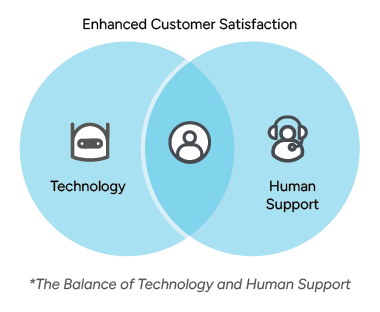
Think about your experiences with customer support. When faced with an unresolved issue or urgent concern, you probably preferred to speak with a real person who could understand your frustrations and offer a solution tailored to your unique problem. AI, despite its speed and availability, lacks the ability to offer that level of personalization and empathy that human agents bring to the table.
For example, consider the scenario of an irate customer whose app crashes during an important presentation. They don’t just need a troubleshooting script—they need someone who can listen to their concerns, empathize with their frustration, and provide a solution that accounts for the urgency of the situation.
Human expertise in Help Desk Support goes beyond fixing issues. It’s about crafting solutions and building relationships that foster trust and long-term loyalty.
A bad hire in a help desk role doesn’t just impact your support team—it affects your entire organization. Delays in issue resolution can lead to frustrated customers, lost revenue, and damage to your reputation. Investing in the right talent upfront can save significant costs and prevent long-term challenges.
How to Overcome Hiring Challenges
The key to building an effective help desk team is a combination of strategic planning and access to the right resources. Here’s how decision-makers can streamline the process:
step 1
Define Your Needs Clearly: Outline the exact skills and qualifications required, along with a clear understanding of your company’s tools and workflows.
step 2
Leverage External Expertise: Partnering with recruitment specialists like LevelUp ensures access to a pre-vetted talent pool, saving time and ensuring quality hires.
step 3
Focus on Retention: Offer competitive compensation, opportunities for growth, and a positive work environment to keep your team motivated and engaged.
step 4
Embrace Flexible Solutions: Consider remote or offshore teams to tap into a larger talent pool and scale as your business grows.
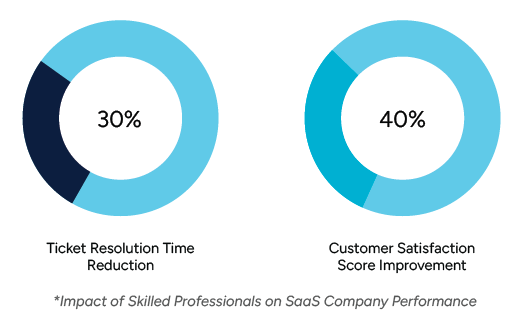
Consider a mid-sized SaaS company that experienced a 30% reduction in ticket resolution time after revamping their help desk team with skilled professionals. By hiring agents with the right blend of technical expertise and customer-centric focus, they boosted satisfaction scores by 40% within six months
Things to Consider When Building Your Help Desk Team
Before hiring, ask yourself:
- What are the primary tasks my help desk team will handle?
- What tools and systems will they need to be familiar with?
- How can I ensure a seamless onboarding process?
- What metrics will define success for my help desk team?
Addressing these questions can help you create a focused hiring plan and set your team up for success.
Interview Questions That Separate the Good from the Great in Help Desk Roles
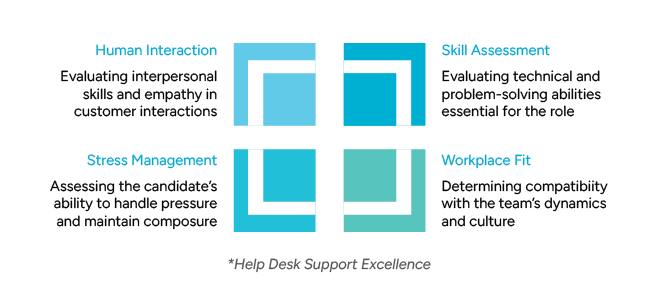
Identifying the best help desk support professionals starts with asking the right questions. These four categories—skill, workplace, stress, and human—help uncover a candidate’s ability to excel in the role while integrating into your team.
1. Skill Questions: Thinking Outside the Script
These questions test not just technical knowledge, but also creativity, resourcefulness, and adaptability in unexpected situations.
- “You’re troubleshooting a system issue, but every solution you try doesn’t work. What’s your next step when nothing seems to fix the problem?” Purpose: Evaluates persistence, resourcefulness, and whether the candidate knows when to escalate an issue.
- “A customer reports that their software isn’t working, but you suspect it’s a user error. How would you diagnose the problem without blaming the customer?” Purpose: Assesses how candidates balance technical troubleshooting with maintaining a positive customer experience.
- “You have to explain a complex technical issue to a non-technical customer. How would you ensure they understand without oversimplifying?”Purpose: Tests the candidate’s communication skills and ability to tailor explanations to different audiences.
2. Workplace Questions: Understanding team dynamics
These questions focus on how candidates integrate into a team and contribute to a positive work environment.
- Example Questions:
- “Your teammate disagrees with your solution to a problem during a customer call. How would you handle the situation while still providing the customer with excellent support?” Purpose: Tests conflict resolution skills and the ability to remain professional under pressure.
- “What’s the best way to collaborate with a teammate who has a completely different communication style than you?”Purpose: Assesses adaptability and interpersonal skills in diverse team environments.
- “If you’re asked to document a process you’re confident in but don’t normally handle, how would you ensure it’s accurate and useful for your team?”Purpose: Reveals willingness to contribute beyond regular tasks and ensures attention to detail.
3. Stress Questions: Assessing Poise Under Pressure
These unconventional questions test how candidates manage stress, prioritize tasks, and stay effective under challenging conditions.
- Example Questions:
- “You’re juggling three high-priority tickets, and the system goes down, preventing you from accessing customer information. What’s your immediate plan of action?” Purpose: Examines crisis management and prioritization skills during high-pressure scenarios.
- “A frustrated customer interrupts you repeatedly during troubleshooting. How would you remain focused and guide them to a resolution?”Purpose: Tests patience, emotional intelligence, and ability to maintain control in difficult conversations.
- “How do you recharge or refocus after dealing with a particularly challenging or emotional customer interaction?”Purpose: Explores self-awareness and stress management strategies.
4. Human Questions: Getting to Know the Person Behind the Role
These questions go beyond work to understand the candidate’s values, motivations, and personality.
- Example Questions:
- “If you could automate one part of your job to focus on what you enjoy most, what would it be and why?” Purpose: Highlights what the candidate values most in their work and how they approach efficiency.
- “What’s a skill or hobby you’ve developed outside of work that you believe makes you better at your job?”Purpose: Provides insight into the candidate’s broader interests and transferable skills.
- “If you had unlimited resources to improve one aspect of customer support, what would you change and why?”Purpose: Explores creativity and problem-solving vision on a larger scale.
By incorporating these categories into your interview process, you can:
Identify Top TalentGain a holistic view of each candidate’s skills, personality, and work style.
Avoid Hiring MistakesSpot potential red flags, like poor stress management or misalignment with your company culture.
Build Stronger TeamsEnsure every hire contributes to a collaborative, productive, and positive workplace.
Using these questions allows you to confidently evaluate candidates, knowing you’ve covered the technical, emotional, and interpersonal aspects of the role.
LevelUp: Your Partner in Building Exceptional Help Desk Support

At LevelUp, we understand that human expertise is irreplaceable in delivering exceptional remote support. Our team of skilled offshore professionals is ready to take on your most challenging technical issues, ensuring your customers receive top-tier support—every time.