Database Management
- Data Modeling: Designs and maintains efficient database structures to optimize data storage and retrieval.
- Database Performance Tuning: Identifies and resolves performance bottlenecks to ensure smooth operation.

Safeguard critical data, optimize complex queries, and ensure seamless database scalability with skilled offshore database administrators.
30-day service fee refund. No long-term contracts.





That's a cost saving of up to $56,352 per year
Think about how your company’s flagship application suddenly slows to a crawl during a major product launch. Customer orders aren’t processing, internal teams are scrambling, and the entire operation feels paralyzed.
What’s the problem? A poorly optimized database query that went unnoticed in routine operations. In moments like these, the true value of a Database Administrator (DBA) comes into focus.
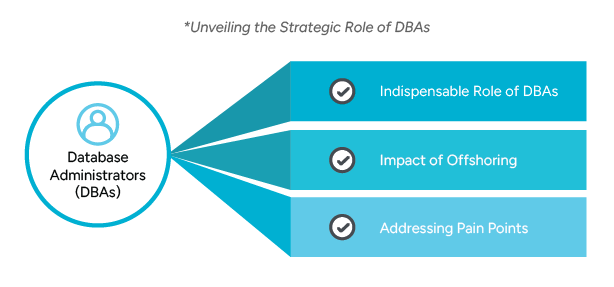
Today’s DBAs are strategic architects who design, optimize, and safeguard the databases that drive modern business. With companies generating more data than ever before, having the right expertise to manage, secure, and scale these systems has become a business-critical priority.
However, as competition for onshore talent heats up, forward-thinking businesses are tapping into offshore Database Administrators to fill the gap with cost-effective, specialized expertise.
Below, we’ll explore why Database Administrators are indispensable, how offshoring amplifies their impact, and how this process addresses common pain points for decision-makers in data-driven industries.
SQL remains the gold standard for querying and manipulating data across various platforms. Whether working with Microsoft SQL Server, IBM Db2, or Oracle, DBAs should be fluent in writing complex queries, stored procedures, and triggers.
While no DBA is expected to be an expert in every database system, hands-on experience with at least one or two major players: Oracle, Microsoft SQL Server, MySQL, MongoDB, IBM Db2, PostgreSQL, Redis, is essential. Each platform has its unique features and quirks.
Understanding how to optimize queries, utilize indexing strategies, and tune database parameters can drastically reduce resource consumption. This skill set is especially prized in cloud environments, where costs are tied to consumption.
With high-profile breaches making headlines, security awareness has never been more critical. DBAs should be adept at least-privilege models, encryption methodologies, and patch management.
Failure is inevitable. Hardware breaks, malicious attacks happen, and natural disasters strike. A skilled DBA anticipates these failures with robust backup schedules and proven disaster recovery plans that minimize downtime.
As organizations adopt DevOps practices, DBAs increasingly need familiarity with tools like Docker, Kubernetes, and Git to manage and deploy database services in continuous integration and continuous deployment (CI/CD) pipelines.
Many DBAs come from a programming background, making them adept at C, Java, or other languages. Knowledge of scripting languages like Python or PowerShell can streamline automation tasks.
Databases often sprawl across different systems, requiring DBAs to engage in creative problem-solving, especially when diagnosing performance bottlenecks or addressing unexpected failures.
Combining these skills with strong communication and documentation practices is what differentiates an average DBA from a top-tier professional.

According to an article on TechNewsWorld, DBAs see brighter job prospects due to ongoing IT challenges that arise from increasingly complex infrastructures. Enterprises are also expanding their digital footprints, which in turn intensifies the need for specialized expertise.
It’s no secret that major corporations, including Google, Facebook, IBM, Nike, and Coca-Cola, regularly outsource certain IT functions to specialized offshore teams. This approach yields:
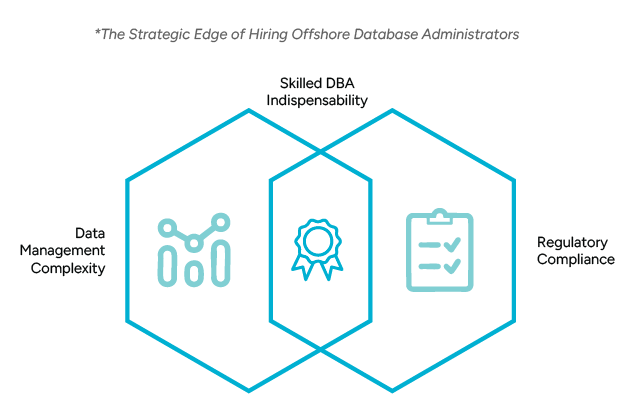
As businesses generate and manage massive volumes of data, the complexity of their data environments skyrockets. Today’s DBAs are tasked with integrating cloud databases alongside on-premise systems, managing data lakes, and ensuring compliance with regulations like GDPR and HIPAA. The increasing complexity has made skilled DBAs indispensable for organizations juggling multiple frameworks and environments.
With more businesses embracing cloud solutions like AWS, Microsoft Azure, and Google Cloud, modern DBAs are expected to bring a flexible, cloud-first mindset. From virtualization to infrastructure-as-code, they need to navigate dynamic, scalable environments that can adapt to business needs in real time.
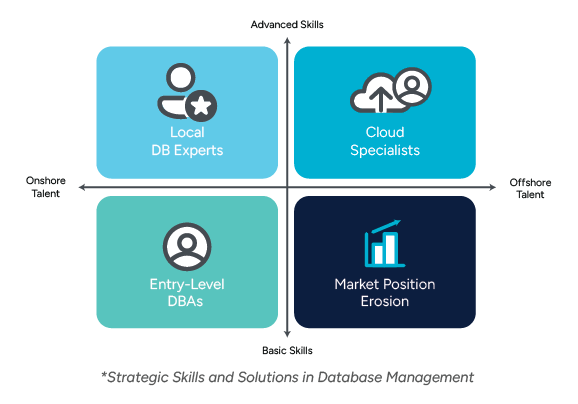
The bottom line? As data management becomes more complex, businesses need highly skilled DBAs with advanced technical expertise. Offshoring provides an efficient way to bridge talent gaps, giving companies access to specialists who can help them stay ahead in their respective industries.
DBAs tend to earn on the high side among IT professionals, reflecting their pivotal role. Several factors influence compensation: years of experience, specific industry (finance vs. education), and specialized skill sets (like Oracle RAC or SQL performance tuning).
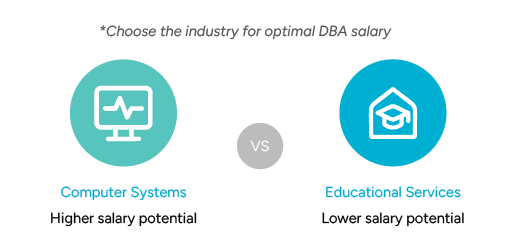
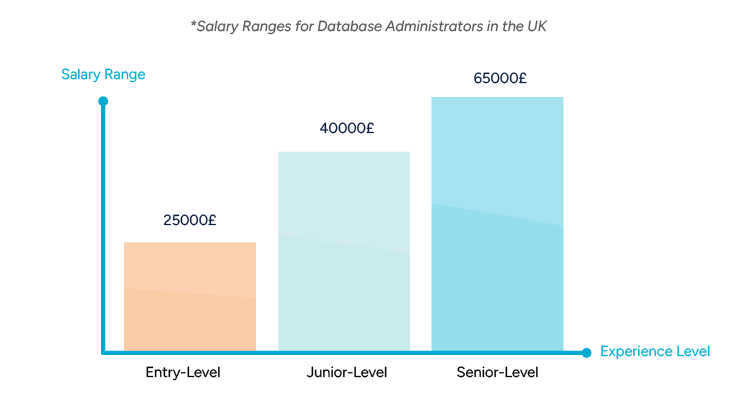
Offshoring these roles can translate to significant cost advantages for businesses, as the salary expectations in many outsourcing hotspots, such as parts of Asia, Eastern Europe, and Latin America, are typically lower than in Western Europe or the United States.
While specific offshore salary ranges can vary widely based on the region and level of expertise, companies frequently cite cost savings of 30% to 60% when hiring offshore DBAs compared to onshore talent.
LevelUp’s hiring model can deliver even greater savings, with businesses saving up to 66% on this role based on current salary benchmarks.
When companies lack a DBA, or rely on underqualified database personnel, they risk numerous operational, financial, and security pitfalls. Let’s examine some of the common pain points:
Databases that aren’t regularly tuned can develop performance bottlenecks. Critical queries take far longer to execute, user satisfaction plummets, and the organization may incur higher costs, especially in cloud pay-as-you-go models. Even a single inefficient query can balloon compute usage.
A DBA is the “last line of defense” for organizational data. Without stringent security measures, like patch management, role-based access, and encryption, databases become prime targets for cybercriminals. According to a data breach study sponsored by IBM, the average global cost of a data breach sits at $3.92 million, with breaches taking an average of 279 days to identify and contain. A skilled DBA significantly reduces the odds of such catastrophes.
A lost or corrupted database can halt operations. If regular backups, verifications, and disaster recovery drills aren’t performed, organizations can face extended downtime. This is especially damning for industries like finance or e-commerce, where every minute of downtime translates to lost revenue and damaged reputations.
Databases evolve. Tables, schemas, and stored procedures change over time. Without proper documentation, confusion reigns. Developers deploy code that conflicts with existing structures, and auditing becomes a nightmare. Skilled DBAs maintain comprehensive documentation and version control, ensuring that knowledge is accessible to everyone on the team.
Performance issues, data breaches, and inefficiencies don’t just impede operations; they also inflate costs. Poorly optimized queries, for example, ramp up cloud compute charges. Recovering from a breach can mean steep regulatory fines, legal fees, and the loss of customer trust. Not having a designated DBA often results in a patchwork of responsibilities that fall on overloaded developers or IT generalists.
Given these pain points, how does offshoring a DBA role resolve them?
With teams dispersed across time zones, businesses can have continuous database monitoring. If an issue arises at 3 AM local time, an offshore DBA can address it immediately, preventing extended downtime or data loss.
Offshoring opens the door to DBAs with specialized skill sets, like NoSQL databases, data warehousing, or cloud migration expertise, who may be hard to find or expensive to hire locally. Offshore talent pools are often deep, especially in tech-savvy regions like India, Eastern Europe, or parts of South America.
Hiring offshore allows companies to scale up or down without bearing the full cost of local salaries, employee benefits, and real estate expenses. This agility is invaluable during peak data loads or special projects, such as migrating to a new database platform.
While offshoring can introduce its own data security considerations (like ensuring compliance with local data protection laws), many mature offshore markets have strict laws and robust infrastructure. Skilled offshore DBAs are well-versed in configuring encrypted connections, setting up secure VPNs, and implementing industry best practices.
Reputable offshore providers often maintain well-documented processes, training, and knowledge transfer protocols. This structured approach mitigates the risk that knowledge will be lost if a single DBA leaves the organization.
By distributing workload across geographies, an organization can maintain a near-constant cycle of development and maintenance. Work done in one time zone can be tested and validated by teams in another, compressing project timelines.
To maximize the benefits of offshoring, decision-makers should prioritize the following:
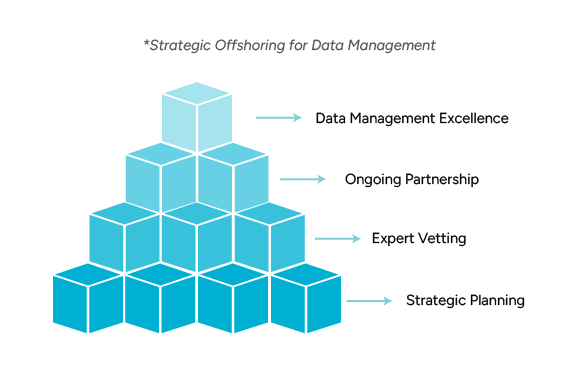
Successful offshoring doesn’t happen by chance. It’s the result of strategic planning, thorough vetting, and an ongoing commitment to partnership. By approaching the process with professionalism and a clear vision, you’ll position your organization to maximize the benefits and outpace competitors who may still be struggling with rising data complexities and local talent constraints.
Data has become the backbone of every decision, innovation, and customer experience. And when data is poorly managed, it can bottleneck progress and create costly risks.
On the flip side, expert database administration transforms your data into an asset that can help you scale smarter and stay ahead of the competition. Hence, having the right team is your growth multiplier.
At LevelUp, we specialize in providing offshore database administrators (DBAs) who thrive in the high-stakes world of data. From performance tuning and airtight security to seamless cloud integration, our team transforms database management from a headache into a strategic asset.
With our collaborative approach, your organization doesn’t just keep up. Instead, it leads to an era where data drives everything.
Ready to level up your IT & Software Development team?
With our 30-day money-back guarantee and no long-term contract, you can try our services risk-free.
Browse roles by category or search
Offshore DBAs are skilled in using remote monitoring and management tools such as SolarWinds, Navicat, or pgAdmin to diagnose and resolve issues efficiently. They adapt to your specific workflows and escalation protocols. LevelUp connects you with professionals experienced in remote database administration and troubleshooting to match your unique requirements.
Offshore DBAs focus on performance tuning, index optimization, and query analysis to maintain database efficiency. They also regularly perform health checks and implement monitoring tools to prevent downtime. LevelUp helps you find candidates who excel at proactive performance management.
Common tools include SQL Server Management Studio, Oracle Enterprise Manager, MySQL Workbench, and cloud-based solutions like AWS RDS or Azure SQL. During recruitment, LevelUp identifies DBAs familiar with your preferred tools so they can seamlessly integrate with your systems.
LevelUp handles the end-to-end recruitment process, from sourcing candidates with the right technical expertise to managing contracts and onboarding. We match you with a DBA who fits your business needs, providing a streamlined and efficient hiring experience.